



Flourish
At Upton Hall School FCJ, our mission is to nurture young women of courage, compassion and purpose. Our Flourish curriculum is central to this mission. It is a carefully sequenced and ambitious personal development programme delivered weekly to all students in Years 7–13.
Rooted in the teachings of the Catholic Church, Catholic Social Teaching and our FCJ values of excellence, dignity, justice, hope, gentleness and companionship, Flourish supports pupils to grow intellectually, emotionally, socially, morally and spiritually.
Our Vision
We believe that education is about more than academic success. It should prepare young people for life by equipping them with the knowledge, character and values they need to become active citizens, confident young women and compassionate leaders.
Flourish provides a regular space in which pupils can reflect, question, discuss and grow. Through knowledge-rich teaching, thoughtful dialogue, prayer, challenge and support, pupils are encouraged to understand themselves, build healthy relationships and contribute positively to society.
Curriculum Intent
The Flourish curriculum is designed to:
-
provide a coherent and progressive seven-year journey from Year 7 to Year 13;
-
promote the dignity, safety and wellbeing of every pupil within a Catholic moral framework;
-
develop pupils’ character, confidence, resilience and ability to make informed decisions;
-
provide high-quality, age-appropriate Relationships, Sex and Health Education in accordance with statutory and diocesan expectations;
-
prepare pupils for their next steps through a comprehensive programme of careers education;
-
develop pupils’ understanding of democracy, law, rights, responsibilities and active citizenship;
-
equip pupils to navigate relationships, media, technology, money and the wider world safely and responsibly;
-
enable pupils to engage respectfully with different experiences, beliefs and perspectives; and
-
help every pupil recognise her capacity to contribute to the common good.
The Structure of Flourish in 2026–27
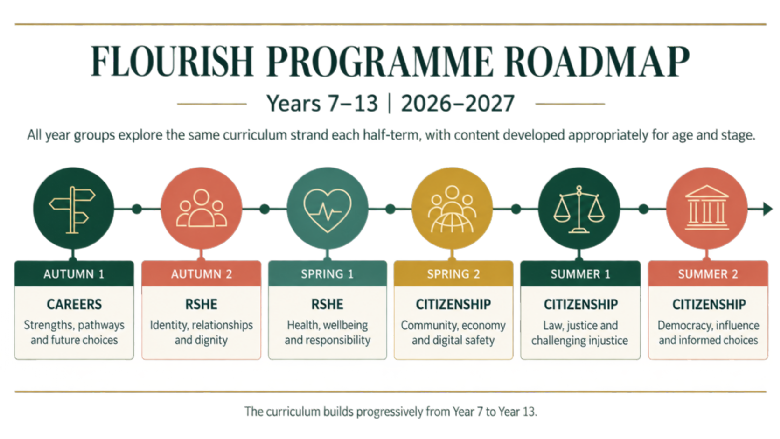
The curriculum has been substantially revised for 2026–27. All year groups explore the same broad curriculum strand at the same time, with teaching adapted to pupils’ age, stage of development and prior learning. This creates a shared whole-school conversation while ensuring clear progression from Year 7 to Year 13.
Autumn 1: Careers and Future Pathways
During the first half term, pupils focus on careers, aspirations and preparation for their next steps. Learning progresses from recognising personal strengths and exploring opportunities to making informed decisions about qualifications, education, training and employment.
As pupils move through the school, they develop their understanding of:
-
personal strengths, interests and aspirations;
-
the range of careers and pathways available;
-
employability and transferable skills;
-
equality of opportunity and challenging workplace stereotypes;
-
GCSE, sixth-form, university, apprenticeship and employment pathways;
-
applications, interviews and workplace expectations;
-
labour-market information and decision-making; and
-
purposeful leadership, vocation and contributing through work.
This teaching complements pupils’ wider careers entitlement, including encounters with employers and education providers, personal guidance and workplace experiences.
Autumn 2 and Spring 1: Relationships, Sex and Health Education
Following the October half-term break, all year groups begin the Ten:Ten Life to the Full programme. This provides a coherent Catholic Relationships, Sex and Health Education curriculum across Years 7–13.
Teaching is grounded in the belief that every person is created and loved by God and possesses inherent dignity. Pupils are helped to understand themselves, develop healthy relationships and make safe, responsible and compassionate choices.
Content is developmental and age-appropriate. Across the seven-year journey, pupils learn about areas including:
-
identity, dignity and self-worth;
-
emotional wellbeing and mental health;
-
changing bodies, puberty and reproductive health;
-
friendship, family life and healthy relationships;
-
consent, communication and personal boundaries;
-
respectful relationships and recognising harmful behaviour;
-
sexual harassment, misogyny, exploitation and abuse;
-
online relationships, pornography and the influence of digital media;
-
intimate image-sharing, sextortion, deepfakes and AI-generated imagery;
-
sexual health, parenthood and responsible decision-making;
-
equality, diversity and respect for others; and
-
seeking help for themselves or another person.
The curriculum reflects statutory guidance applying from 1 September 2026 and the expectations of the Catholic Education Service and the Diocese of Shrewsbury.
Spring 2, Summer 1 and Summer 2: Citizenship
During the remainder of the year, pupils study Citizenship. They develop the knowledge, skills and confidence required to participate responsibly in their communities and in democratic society.
Through increasingly sophisticated content, pupils explore:
-
belonging, identity and community;
-
rights and responsibilities;
-
democracy, Parliament and elections;
-
the rule of law and the justice system;
-
local, national and global government;
-
the role of the media and the importance of reliable information;
-
equality, diversity and human rights;
-
financial and economic understanding;
-
social justice and Catholic Social Teaching;
-
environmental responsibility;
-
political participation and constructive debate; and
-
how individuals and communities can bring about positive change.
Pupils are encouraged to examine different perspectives, use evidence, express reasoned views and take meaningful action in support of the common good.
Curriculum Implementation
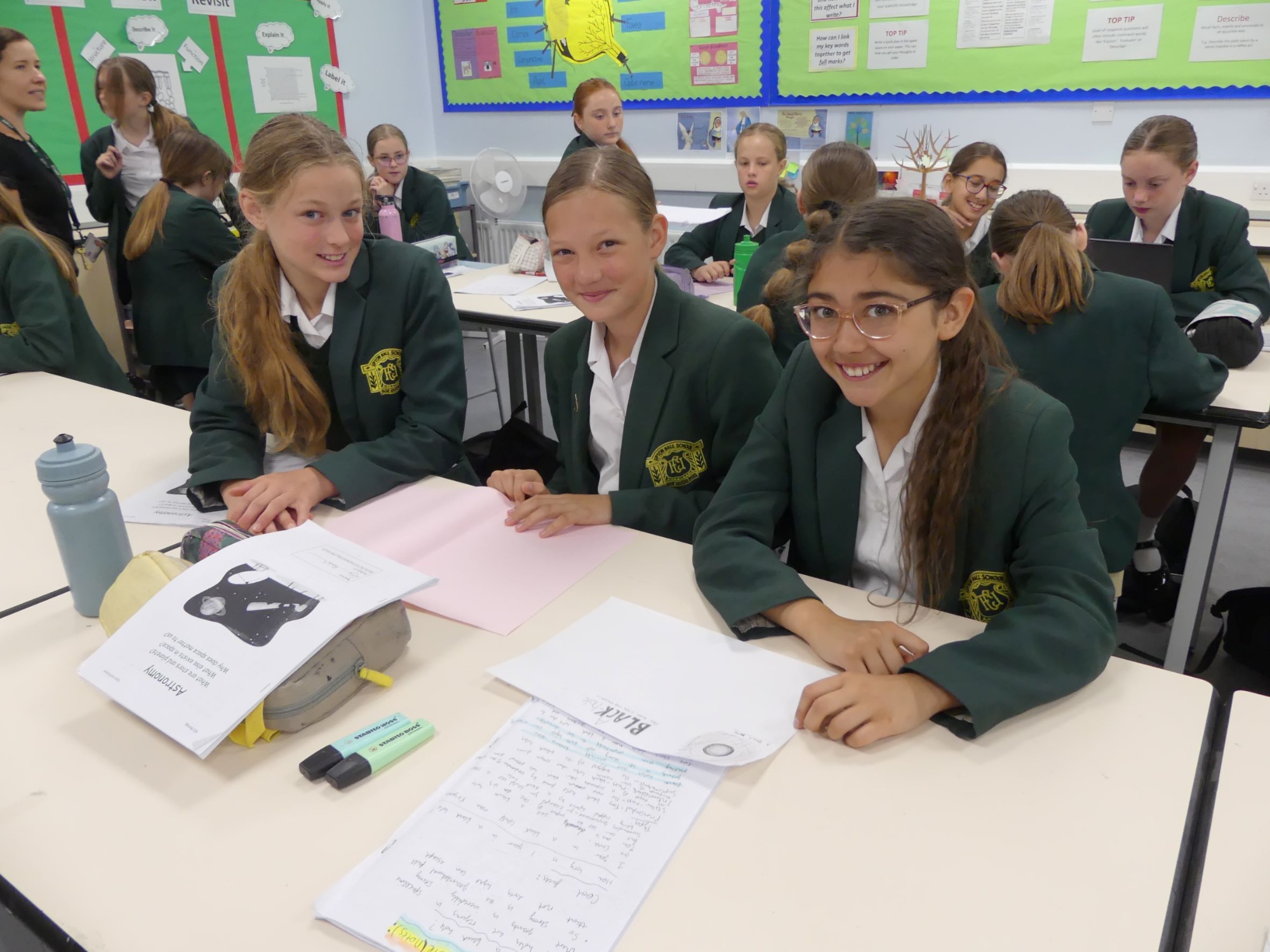
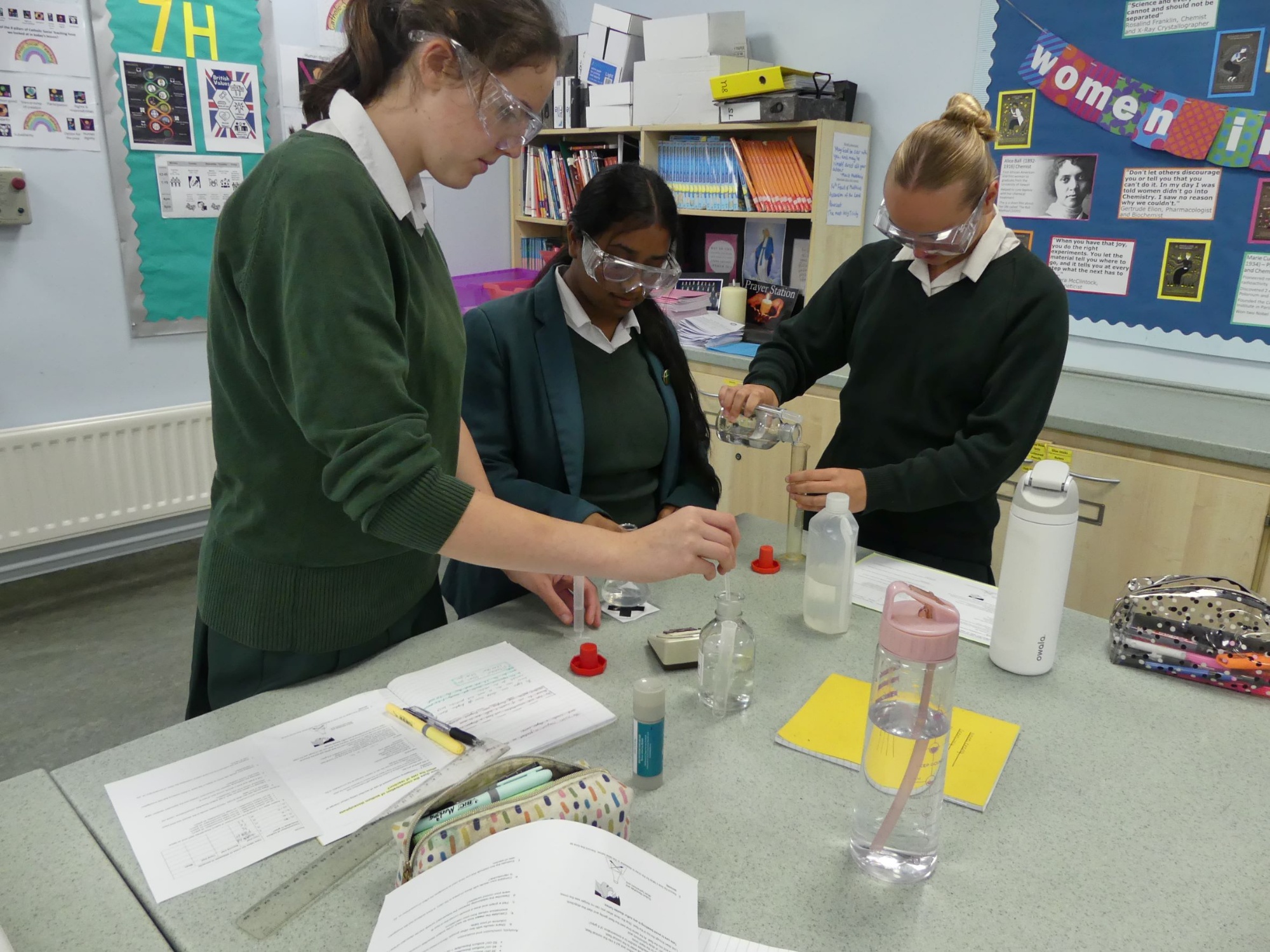
Flourish is taught weekly to all pupils in Years 7–13. Lessons are classroom-based and follow a consistent structure that supports knowledge, reflection and purposeful discussion:
-
Starter – a question, scenario or retrieval activity that connects with prior learning.
-
Prayer and reflection – an opportunity for stillness and connection with Catholic teaching and the school’s values.
-
Knowledge and discussion – explicit teaching supported by discussion, case studies and carefully selected resources.
-
Application – activities through which pupils apply their knowledge to realistic situations and decisions.
-
Plenary – an opportunity to review learning and consider its practical significance.
-
Affirmation – a final message that reinforces dignity, identity, responsibility and hope.
Lessons are inclusive, age-appropriate and sensitive to pupils’ individual experiences and needs. Teaching takes account of pupils with special educational needs and disabilities and is adapted where necessary so that all pupils can access essential knowledge.
Flourish draws upon high-quality resources, including Ten:Ten’s Life to the Full and Cinema in Education programmes, alongside carefully developed school resources tailored to the needs and context of our pupils.
Partnership with Parents and Carers
Parents and carers are the first educators of their children. The school therefore seeks to work openly and constructively with families.
A parental consultation on Relationships, Sex and Health Education was conducted online in June 2026. A central theme within the responses was that parents wished to know more specifically what would be taught and when.
In response, the school will provide year-specific information before relevant Ten:Ten teaching begins. This will outline the topics pupils will study and help parents and carers continue appropriate conversations at home. Parents may also access information about the Ten programme through its parent portal.
Further information about curriculum materials, statutory content and the right to request withdrawal from specified elements of sex education is available within the school’s Relationships and Sex Education Policy.
Measuring Impact
We assess the impact of Flourish through a range of complementary evidence:
-
Knowledge assessment: Pupils complete structured assessments containing core-knowledge and application questions. Outcomes are used to identify whether understanding is Developing, Secure or Excellent.
-
Pupil voice: Surveys, discussions and curriculum reviews explore what pupils know, how they experience the curriculum and how confidently they can apply their learning.
-
Written work: Exercise books demonstrate engagement, developing knowledge, reflection and progression over time.
-
Formative assessment: Questioning, discussion, retrieval activities and lesson tasks allow teachers to identify misconceptions and respond to pupils’ needs.
-
Pastoral and safeguarding information: Relevant trends in attendance, wellbeing, safeguarding and pastoral support help the school evaluate emerging needs and refine curriculum content.
-
Staff feedback and quality assurance: Lesson visits, work scrutiny and feedback from those delivering Flourish support consistent implementation and continuing improvement.
-
Wider participation: Pupils’ involvement in leadership, service, careers activities and wider school life provides evidence of how they apply their learning.
Assessment within Flourish is intended to evaluate pupils’ knowledge and understanding. It does not seek to judge pupils’ personal beliefs, experiences or individual circumstances.
Why Does Flourish Matter?
Young people are growing up in a world that can feel complex, pressurised and fast-moving. Flourish gives pupils the time, knowledge and space they need to reflect, grow and develop as whole people.
It is a practical expression of our Catholic mission: helping every young woman recognise her dignity, discover her voice, form healthy relationships, make informed choices and grow in wisdom and grace.
Flourish is not simply a curriculum subject. It is formation.
It represents our commitment that every pupil will leave Upton Hall School FCJ with excellent qualifications and with the confidence, compassion, knowledge and moral clarity to make a positive difference in the world.
For further information, please contact Mr P Jones, Assistant Headteacher (Inclusion).